
Loading page
Data-backed strategies to get cited by ChatGPT, Claude, Perplexity, and Gemini. Learn the 6 citation boost factors that increase AI visibility up to 41%.
The shift is undeniable: AI-generated responses now influence how millions discover brands, make decisions, and consume information. While traditional SEO focuses on ranking in search results, Generative Engine Optimization (GEO) focuses on something different: getting your content cited in AI responses. This guide synthesizes research from Princeton's GEO study , Search Engine Land's 8,000 citation analysis , and our own analysis of 950,000+ AI citations to provide actionable strategies for improving your AI visibility.
Before diving into optimization tactics, let's establish what actually drives AI citations.
AI referral traffic has grown dramatically:
Metric | Growth | Source |
AI referral traffic | +527% | Jan-May 2025 |
Generative AI traffic | +1,200% | Jul 2024-Feb 2025 |
AI Overviews presence | 6.49% → 13.14% | Jan-Mar 2025 |
Market share distribution:
Platform | Estimated Share | Citation Style |
ChatGPT | 40-60% | Academic, comprehensive |
Perplexity | 15-20% | Real-time, inline numbered |
Gemini | 10-15% | Google ecosystem |
Claude | 8-12% | Primary sources, methodology |
Our 950K citation analysis revealed surprising patterns:
Source Type | Share of Citations | Avg Position |
Specialized vertical sites | 97.5% | 5.25 |
Wikipedia | 1.7% | 3.28 |
Academic | 0.4% | 4.38 |
Forums | 0.2% | 6.16 |
Reddit | 0.1% | 7.30 |
Key insight: Wikipedia gets cited early (position 3.28) but infrequently (1.7% of total). Specialized, authoritative content in your niche drives actual citation volume.
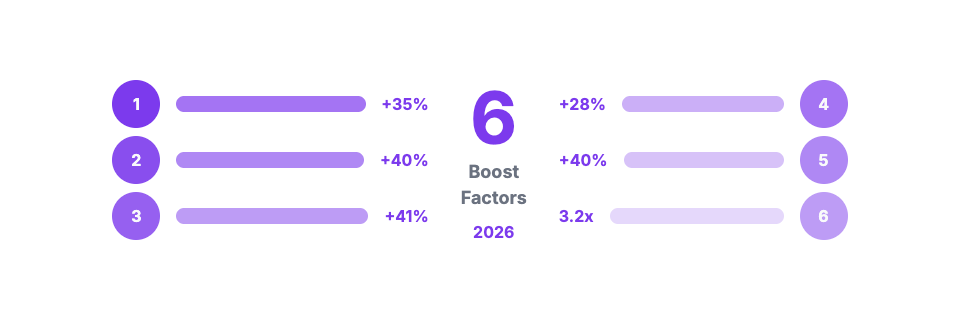
Research identifies six content characteristics that significantly increase AI citation probability:
AI models heavily weight opening content. Princeton's research shows content with a clear summary in the first 60 words receives 35% more citations.
Why it works: AI models allocate limited tokens per source. Front-loading your key message ensures it gets captured.
Implementation:
Good:
"The average cost of customer acquisition in SaaS increased
to $702 in 2025, up 45% from 2023. This guide breaks down
CAC benchmarks by company stage, industry, and go-to-market
model, with strategies to reduce acquisition costs."

Bad:
"In today's competitive landscape, understanding your
metrics is more important than ever. Many companies
struggle with customer acquisition, and there are various
factors to consider when thinking about costs..."
Content from authors with visible credentials (MD, PhD, CFA, JD) receives 40% more citations. AI models interpret credentials as authority signals, cross-referencing them against Knowledge Graph entities and platform presence.
Key implementation: Add credentials to visible author bio + Schema.org Person markup with honorificSuffix, jobTitle, and sameAs links.
→ Deep dive: E-E-A-T for AI: Complete Authority Signals Guide - credentials by industry, Schema.org examples, building authority without formal credentials, Knowledge Graph entity establishment.
Content containing specific statistics with sources receives 41% more citations. AI models prefer verifiable, quantifiable claims.
Effective statistics usage:
Approach | Example | Citation Impact |
✅ Specific + sourced | "Customer churn averages 5.6% monthly (Recurly 2025)" | High |
⚠️ Specific, unsourced | "Customer churn averages 5.6% monthly" | Medium |
❌ Vague | "Customer churn is significant" | Low |
Best practices:
Run a free audit: see if ChatGPT, Gemini and Copilot recommend you, in about a minute.
Direct quotes from recognized experts increase citations by 28%. Quotations signal external validation and add credibility.
Effective quotation patterns:
High impact:
"As Satya Nadella noted in Microsoft's 2025 earnings call:
'AI copilots have moved from novelty to necessity across
enterprise workflows.'"

Medium impact:
"Industry experts suggest AI adoption is accelerating."

Low impact:
"Many people believe AI is important."
Where to find citable experts:
Industry conference keynotes
Earnings calls and investor presentations
Peer-reviewed research
Government reports and testimony
Professional association publications
Content with clear hierarchical structure (H2 headings, H3 subheadings, bullet points) receives 40% more citations. AI models parse structured content more effectively.
Optimal structure pattern:
## Main Topic (H2)

Brief introduction to the topic area.

### Subtopic A (H3)

- Key point 1 with specific detail

- Key point 2 with data or example

- Key point 3 with actionable insight

### Subtopic B (H3)

| Category | Metric | Benchmark |
| -------- | ------ | --------- |
| Small    | $X     | Y%        |
| Medium   | $X     | Y%        |
| Large    | $X     | Y%        |
Structure checklist:
One H1 (article title only)
H2 for major sections (5-8 per article)
H3 for subsections within H2s
Bullet points for lists of 3+ items
Tables for comparative data
Short paragraphs (2-4 sentences)
Our freshness analysis shows content updated within 30 days receives 3.2x more citations for time-sensitive queries.
Freshness sensitivity by query type:
Query Type | Freshness Impact | Update Frequency |
Product comparisons | Very High | Monthly |
Pricing/costs | Very High | When changes occur |
Regulations | High | When laws change |
Best practices | Medium | Quarterly |
Concepts/definitions | Low | Annually |
Implementation:
dateModified (only when substantively updating)Each AI platform weighs the 6 factors differently:
Platform | Primary Focus | Key Differentiator |
ChatGPT | Credentials + Depth | Wikipedia dependency (~5% citations) |
Perplexity | Freshness + Structure | Real-time search, 21+ citations/answer |
Claude | Primary Sources + Methodology | 91.2% attribution accuracy |
Gemini | Google Ecosystem | GBP, reviews, NAP signals |
Baseline optimization (works across all platforms): TL;DR first 60 words, H2→H3→bullets, author credentials in Schema.org, statistics with sources, FAQ section. → Complete platform strategies: ChatGPT vs Perplexity vs Claude vs Gemini: Platform-Specific GEO Strategies 2026 - detailed tactics, checklists, and implementation guides for each platform.
Implement Article Schema.org with datePublished and dateModified
Add FAQPage Schema.org for FAQ sections
Include Person Schema with author credentials
Validate with Google's Rich Results Test
Set up rapid indexing via Search Console
See your mentions across ChatGPT, Claude and Perplexity in real time, the moment buyers ask.
TL;DR summary in first 60 words
Author credentials visible on page
H2→H3→bullet hierarchy throughout
Statistics with linked sources
Expert quotations where relevant
FAQ section at end
Categorize content by freshness sensitivity
Set update triggers (product releases, data refreshes)
Schedule quarterly content audits
Update dateModified only for substantive changes
Track AI citations across platforms
Compare citation positions over time
Monitor competitor citation patterns
Measure before/after update impact
Our data shows Wikipedia (1.7%) and Reddit (0.1%) combined represent under 2% of citations. While valuable for authority signals, they shouldn't dominate your strategy.
Instead: Focus on becoming the authoritative source in your specific niche (97.5% of citations).
Google explicitly warns against updating dates without substantive content changes. AI models likely detect this pattern.
Instead: Only update dateModified when genuinely improving content.
Optimizing only for ChatGPT ignores Perplexity's freshness requirements, Claude's source preferences, and Gemini's ecosystem signals.
Instead: Implement baseline optimization for all platforms, then layer platform-specific tactics.
Racing to publish shallow content on trending topics rarely wins citations. AI models favor comprehensive, authoritative coverage.
Instead: Publish when you can provide genuine depth and unique value.
**📊 Track your citation metrics automatically**
Monitoring citation volume, position, and platform coverage manually across 5+ AI platforms isn't scalable. [Qwairy](https://www.qwairy.co/) automates this tracking—with daily monitoring, trend reports, and alerts when your visibility changes.
[Start tracking →](https://www.qwairy.co/)
Metric | What It Measures | Target |
Citation volume | How often you're cited | Increasing trend |
Citation position | Where you appear in responses | Positions 1-5 |
Platform coverage | Which AIs cite you | All major platforms |
Query coverage | Which queries trigger citations | Expanding set |
Important caveat: Correlation between optimizations and citations doesn't prove causation. Other factors that affect results:
Query volume fluctuations
Competitor content changes
Platform algorithm updates
Backlink acquisition timing
Content quality improvements
Rigorous approach:
Measure your AI citation performance: Qwairy tracks your brand mentions across all major AI platforms—with daily monitoring, change alerts, competitor benchmarking, and trend reports. See which of your optimizations actually drive visibility improvements.
Track your mentions across ChatGPT, Claude, Perplexity and all major AI platforms. Join 1,500+ brands monitoring their AI presence in real-time.
Free trial • No credit card required • Complete platform access
Other Articles
Answer Engine Optimization (AEO): The Complete 2026 Guide
A complete, practitioner-level guide to Answer Engine Optimization: what AEO is, how answer engines like ChatGPT, Perplexity and Google AI Overviews select and cite content, the core levers, a step-by-step workflow, and how to measure it.
How to Set Up AI Referral Tracking in GA4, Plausible and Matomo
Most analytics tools miss or misclassify AI referral traffic by default. This step-by-step guide shows you how to properly track visits from ChatGPT, Perplexity, Claude, Gemini, and other AI platforms in GA4, Plausible, and Matomo.