Loading page

Being mentioned by ChatGPT is not enough if it calls your products overpriced. A step-by-step process to analyze and improve how AI assistants talk about your brand, with Nike as an example.
Getting mentioned by ChatGPT is only half the job. The other half is what it says about you. When someone asks for the best running shoes, does ChatGPT recommend your brand, or does it warn people that you are overpriced? That is brand sentiment in AI search: whether an AI assistant talks about your brand positively or negatively. This guide walks through a step-by-step process to analyze it and improve it, using Nike as an example.
💡 TL;DR
Brand mentions are the tip of the iceberg. To improve how ChatGPT, Google AI Overviews or Claude talk about you: track sentiment at scale per engine, find the prompts where you are mentioned negatively, read the sources behind those answers, then fix them with your own content and presence on third-party sources. Finally, fact-check the claims AI makes about your prices and products, and make sure every team communicates the same way.
How to improve how ChatGPT is talking about your brand?
Take a simple prompt: "Give me a list of running shoes to run a marathon under $100." In ChatGPT's answer, two brands get very different treatment:
Both brands are mentioned. Only one is truly recommended. If you only track mentions, both look like wins.
Being mentioned in a prompt is the top of the iceberg. What matters is whether the AI pushes your brand or pushes a competitor. A mention that says "avoid this brand" or "too expensive" can cost you the sale. Analyzing sentiment manually in ChatGPT does not scale. You need a GEO tool that runs your prompts repeatedly and scores how each engine talks about you. In Qwairy , the sentiment view shows the global sentiment for your brand, per engine, and the prompts where you are mentioned negatively.
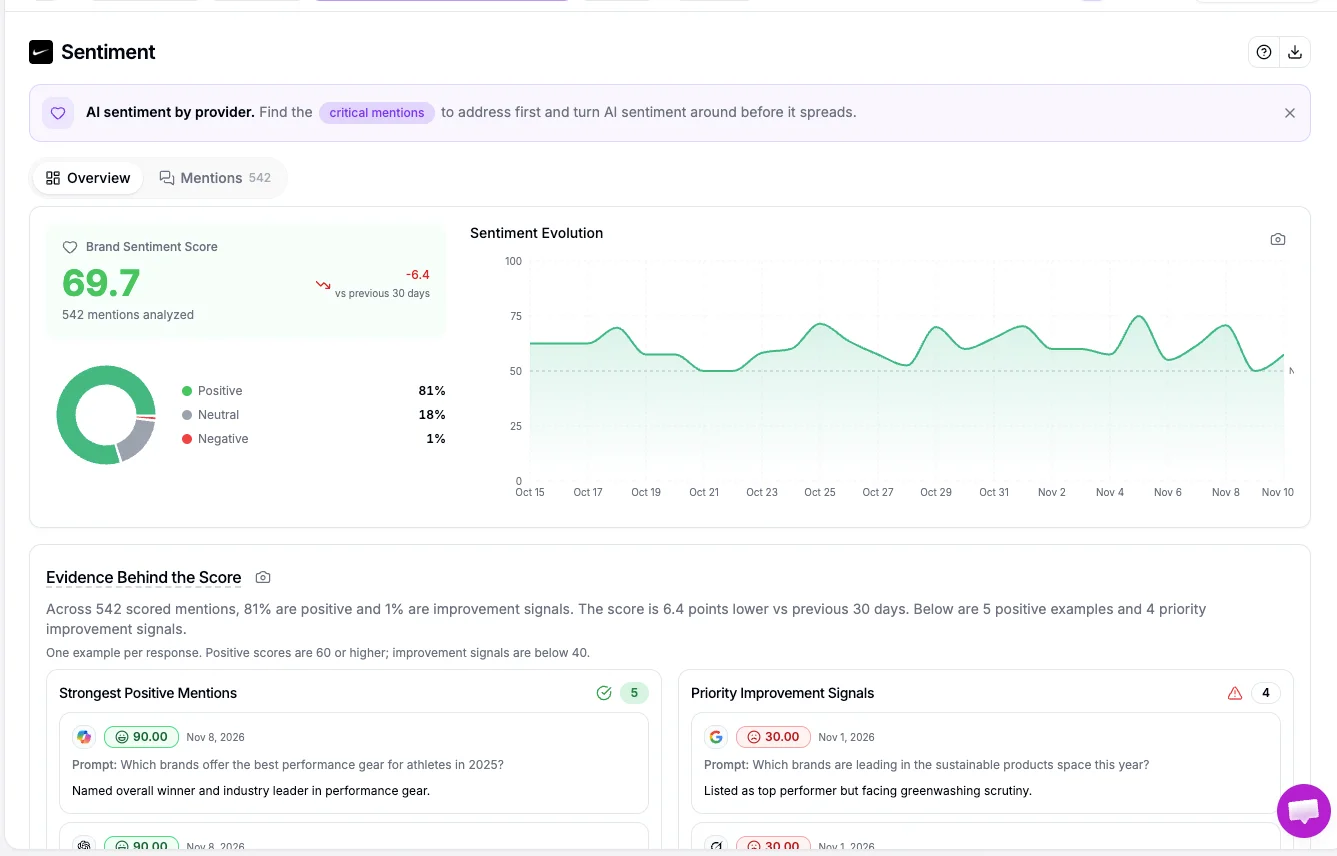
Start with one engine, for example ChatGPT on Qwairy. Filter your tracked prompts by sentiment and isolate the answers where your brand appears in a negative light. Overall sentiment can be very positive while a handful of prompts drag it down. Those are your priorities.
Run a free audit: in a few minutes, ChatGPT, Gemini and Perplexity answer 8 buying questions about your market live, and you see who they recommend.
On Nike's data, one ChatGPT answer stands out. The prompt is a buying guide on affordable running clothes, and the answer says:
Choosing the right athletic apparel for running doesn't mean spending a fortune on expensive brands like Nike.
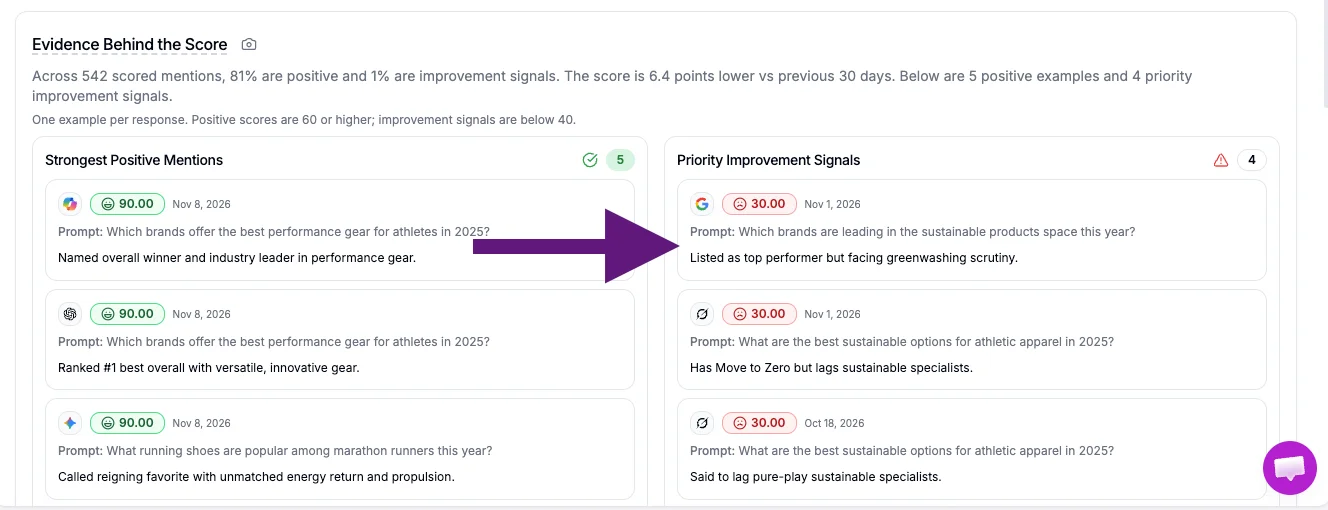
The answer even suggests looking at clearance sections to buy Nike at a discount. Nike is mentioned, but as the expensive option. The next move is to open the sources behind the answer and see who is used as a reference:
These pages shape the narrative. They tell you exactly where the "expensive" perception comes from.
There are two levers.
Create your own content on the topic. If AI says Nike is expensive while Nike does sell affordable products, Nike should publish a dedicated page on budget-friendly running gear. Its brand promise is to have a product for every runner, so the content exists to be written.
Be present on the sources AI uses. Check whether you appear on the third-party pages cited in the answer, and work on being featured on them or on similar sources.
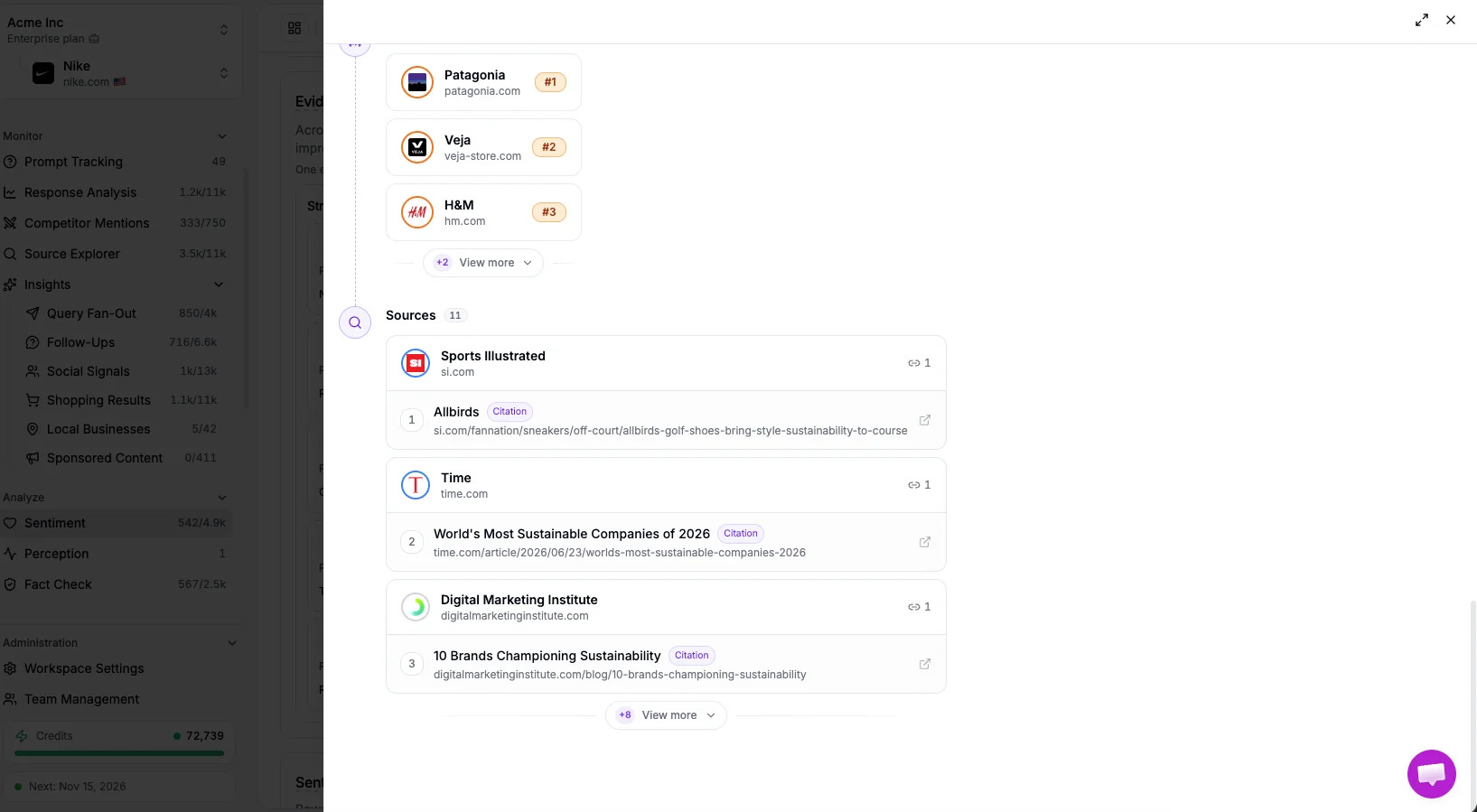
Sentiment differs by engine, so check each one separately. On Google AI Overviews, Nike's sentiment shows no issue to fix. On AI Mode, however, Nike is listed as a top performer but associated with greenwashing allegations: it frequently lands on top-performing lists while facing scrutiny and litigation over sustainability claims. The first fix for this kind of issue is real: if the criticism is about practices, change the practices. Then look at the sources. One cited source is a ranking of the world's most sustainable companies of 2026. If a brand wants to be recognized as sustainable, being present on that kind of ranking is a concrete target.
Sentiment is not the whole picture. AI assistants also state facts about your products, and some are wrong. Qwairy's fact-checking feature extracts the claims made about your brand and groups them by category. Examples from Nike's data:
For each claim, you can see which prompt it came from, then check the sources to confirm the right price or the right figure is there.
When a claim is wrong, you have two options:
The most important lesson: when you launch a product, every part of the company must describe it consistently. Press relations, marketing, sales, partners: everything they publish can surface in AI answers. Nissan applies exactly this approach, with a shared product reference used by all teams. Read How Nissan Turned AI Search into a Reputation Economy with Qwairy .
Want to know how AI assistants really talk about your brand? Try Qwairy for free with 120 credits to track sentiment, sources and claims across ChatGPT, Google AI Overviews, AI Mode, Claude and more.
Track the questions that matter to your business, see which brands each answer mentions and which sources it cites, then work on the gaps.
Free plan with 120 initial credits • No credit card required
Other Articles
GEO Strategy: 5 AI Search Truths and a 4-Step Framework
Five truths about AI search shared at the SEO & GEO Summit in Paris, and the 4-step GEO framework Qwairy gives every client to get recommended by ChatGPT, Gemini and other AI engines.
The GEO Mistake Everyone Makes: Tracking Only the First AI Answer
Most AI visibility checks stop at the first answer. But AI assistants turn questions into conversations, and the follow-up questions they suggest decide which brands stay in the race.