Loading page

Your website is being indexed by AI every day. v1.12 shows you exactly what GPTBot, ClaudeBot, and PerplexityBot are crawling, how much traffic AI platforms drive to your site, and whether your pages are optimized for AI citations.
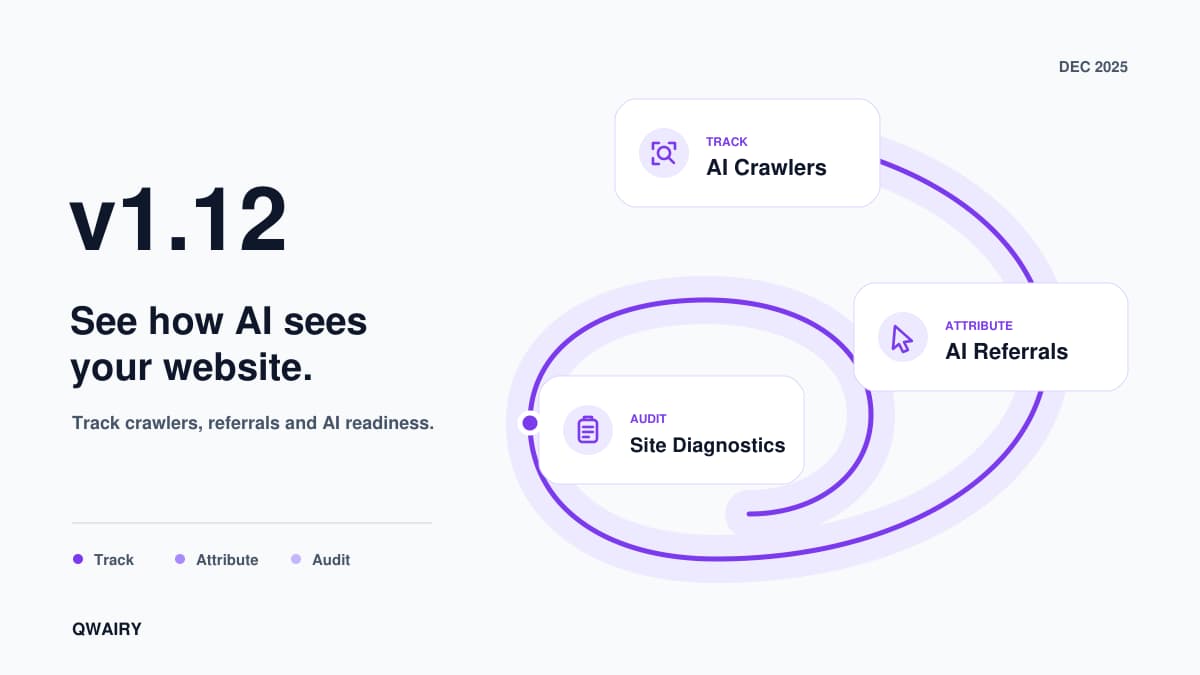
AI is already indexing your website. Every day, crawlers from OpenAI, Anthropic, Google, and Perplexity visit your pages, deciding what to include in their knowledge bases.
But you can't see any of it. Traditional analytics don't track AI crawlers. They don't show which pages ChatGPT learned from. They don't reveal whether your content structure helps or hurts AI comprehension - a critical aspect of Generative Engine Optimization (GEO) .
v1.12 makes the invisible visible. New analytics to track crawler activity, measure AI referral traffic, and audit page-level AI-readiness.
v1.12 introduces a completely redesigned Analytics module with two core components that work together to reveal your AI footprint and help you track the key GEO metrics that matter most.

Every AI platform sends crawlers to index the web. GPTBot for OpenAI. ClaudeBot for Anthropic. PerplexityBot for Perplexity. These crawlers determine what AI knows about your brand. Until now, you had no visibility into this activity. Your server logs might capture it, but extracting meaningful insights required engineering time you don't have. Crawler Analytics changes this:
Metric | What It Reveals |
Total Crawls | How actively AI is indexing your site |
Unique Crawlers | Which AI platforms are learning from you |
Top Crawler | Who's most interested in your content |
Daily Trends | Crawling patterns over time |
OpenAI: GPTBot, ChatGPT-User, OAI-SearchBot
Anthropic: ClaudeBot, Claude-Web
Google: Google-Extended, Googlebot (AI features)
Perplexity: PerplexityBot
Meta: FacebookBot, Meta-ExternalAgent
Microsoft: Bingbot (Copilot), MSNBot
Others: Cohere, Applebot, YandexBot, Bytespider, and more. For each crawler, you see crawl frequency, pages visited, and trends compared to previous periods. If GPTBot suddenly stops visiting, you'll know immediately.

AI crawling activity is a leading indicator:
A SaaS company noticed ClaudeBot crawling 10x more than GPTBot. Investigation revealed OpenAI was blocked by their CDN firewall rules. Fix applied, GPTBot activity normalized within a week.
Run a free audit: in a few minutes, ChatGPT, Gemini and Perplexity answer 8 buying questions about your market live, and you see who they recommend.

When AI cites your website, users click through. This traffic is growing exponentially, but standard analytics bundle it with "direct" or miscategorize it entirely. Our AI Traffic Analytics feature was designed specifically to solve this visibility gap. Referrer Analytics (powered by GA4 integration) tracks traffic specifically from AI platforms:
Platform | Sessions | Trend |
ChatGPT | 1,247 | +34% |
Perplexity | 892 | +67% |
Claude | 456 | +22% |
Gemini | 234 | +45% |
Different AI platforms drive different behaviors. Perplexity users tend to explore multiple pages. ChatGPT users often arrive with specific intent. Understanding these patterns helps optimize landing experiences - whether you're focusing on ChatGPT optimization or Perplexity optimization .
Track week-over-week and month-over-month changes. See which platforms are growing fastest. Identify seasonal patterns in AI referral traffic. A content site discovered 40% of their AI traffic came from Perplexity, despite ChatGPT being 5x larger. Their technical content format aligned perfectly with Perplexity's citation style. Understanding the difference between sources and citations helped them optimize for both platforms.

AI crawlers don't see your site like humans do. They parse structure, evaluate content quality, assess technical health, and decide whether your pages deserve citations. Site Diagnostics audits every page in your sitemap across four dimensions:

Technical Score (0-100): Crawlability, robots.txt compliance, schema markup, structured data, canonical tags, XML sitemap presence. Learn more in our technical GEO checklist .
Content Score (0-100): Readability, heading structure, content depth, keyword relevance, update frequency, internal linking.
AEO Score (0-100): Answer Engine Optimization - how well your content answers questions. FAQ sections, clear definitions, structured answers that AI can extract and cite.
Performance Score (0-100): PageSpeed Insights integration. Core Web Vitals, loading speed, mobile-friendliness. Fast pages get crawled more frequently.
One dashboard with your latest visibility scores, your position model by model and how you compare with competitors.

Click any page for detailed analysis:
Issue | Severity | Type |
Missing schema markup | High | Technical |
No FAQ section detected | Medium | AEO |
Heading hierarchy broken | Medium | Content |
LCP above 2.5s | High | Performance |
Each issue includes:
These features are live for all users. Here's where to find them:
Whether you're tracking crawler activity, measuring AI referral traffic, or optimizing for AI citations - v1.12 gives you the analytics to understand and improve your AI visibility. Start your free trial or book a demo with our team.
Track the questions that matter to your business, see which brands each answer mentions and which sources it cites, then work on the gaps.
Free plan with 120 initial credits • No credit card required
Other Articles
Qwairy v1.20: Follow-Ups, Multi-country Workspaces & Post-purchase
Qwairy v1.20 adds Follow-Ups, multi-country workspaces, a Post-purchase stage and personas, with a catalogue of 18 AI engines from 15 providers, including Claude in its real interface.
Qwairy v1.19: Source Authority, Agent Skills & Connected Analytics
Qwairy v1.19 introduces Source Authority, 36 Agent Skills, rebuilt Crawler Analytics and broader analytics connections to turn AI visibility data into action.