Loading page


A complete, practitioner-level guide to Answer Engine Optimization: what AEO is, how answer engines like ChatGPT, Perplexity and Google AI Overviews select and cite content, the core levers, a step-by-step workflow, and how to measure it.
How Ornikar, France's online driving-school leader, built an operational GEO playbook to become a cited brand in AI answers across driving education and car insurance — with traffic and conversion gains following.
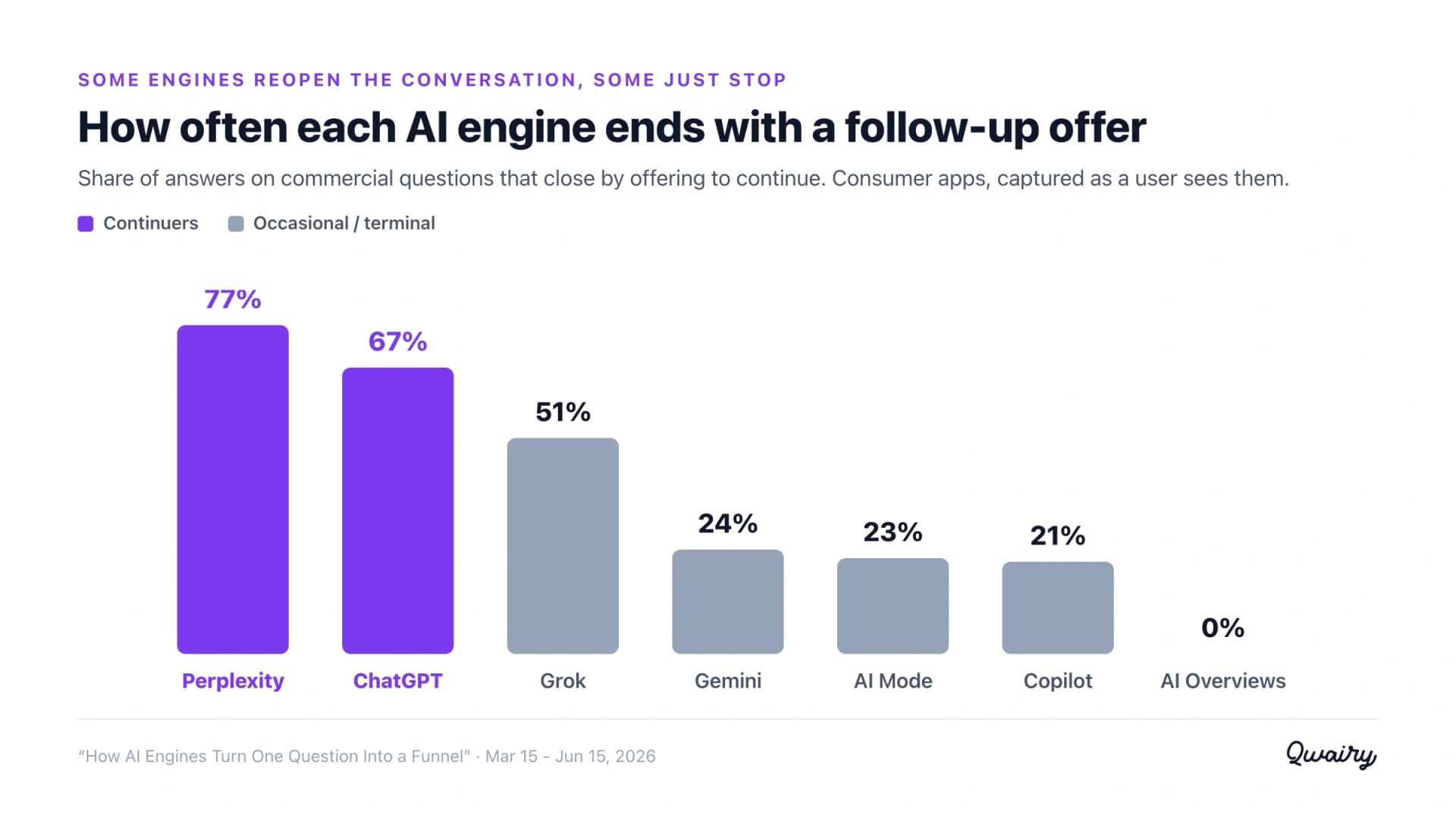
We measured how AI engines END their answers on the commercial questions brands compete on: how often the engine closes by offering to keep going ("If you want, I can narrow this down by budget, region, use case"). Measured across the major AI engines we monitor over a 90-day window.

Most analytics tools miss or misclassify AI referral traffic by default. This step-by-step guide shows you how to properly track visits from ChatGPT, Perplexity, Claude, Gemini, and other AI platforms in GA4, Plausible, and Matomo.
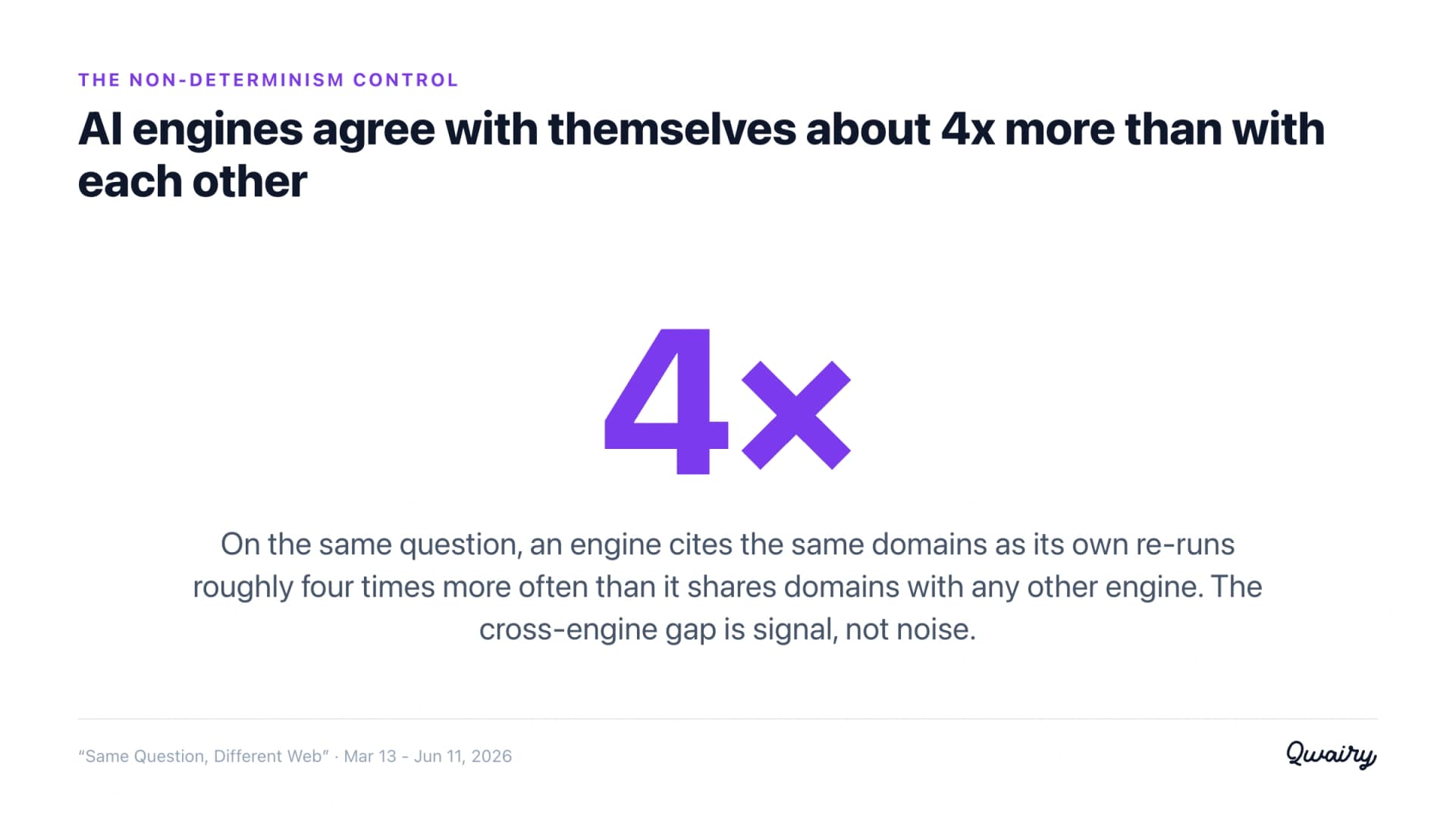
We tested the assumption behind Google's "AI optimization is just SEO" guidance: do the domains cited by Google AI match those cited by ChatGPT, Perplexity, Claude and the rest on the same question? They barely do - cross-engine overlap runs 4-19% (Jaccard), and the single top source matches 4-13% of the time. Measured across eight major AI surfaces on production brands, every prompt run repeatedly, over a 90-day window.
A practical three-way breakdown of SEO, answer engine optimization, and generative engine optimization: what each one means, where they overlap, and how to run them as a single AI visibility program.
A full breakdown of Qwairy's MCP server: what each tool does, how it compares to Visiblie, Omnia, and Foglift, and why native MCP matters for GEO strategy.
SEO/GEO consultant Thibaut Huertas shares how he tripled Bluecoders' brand mentions and source citations across AI models in under 3 months, using Qwairy to identify high-value prompts and authority backlink targets.
Not all AI crawlers do the same job. Learn which bots to allow or block in robots.txt - GPTBot, ClaudeBot, PerplexityBot and more - without accidentally deleting yourself from AI answers.
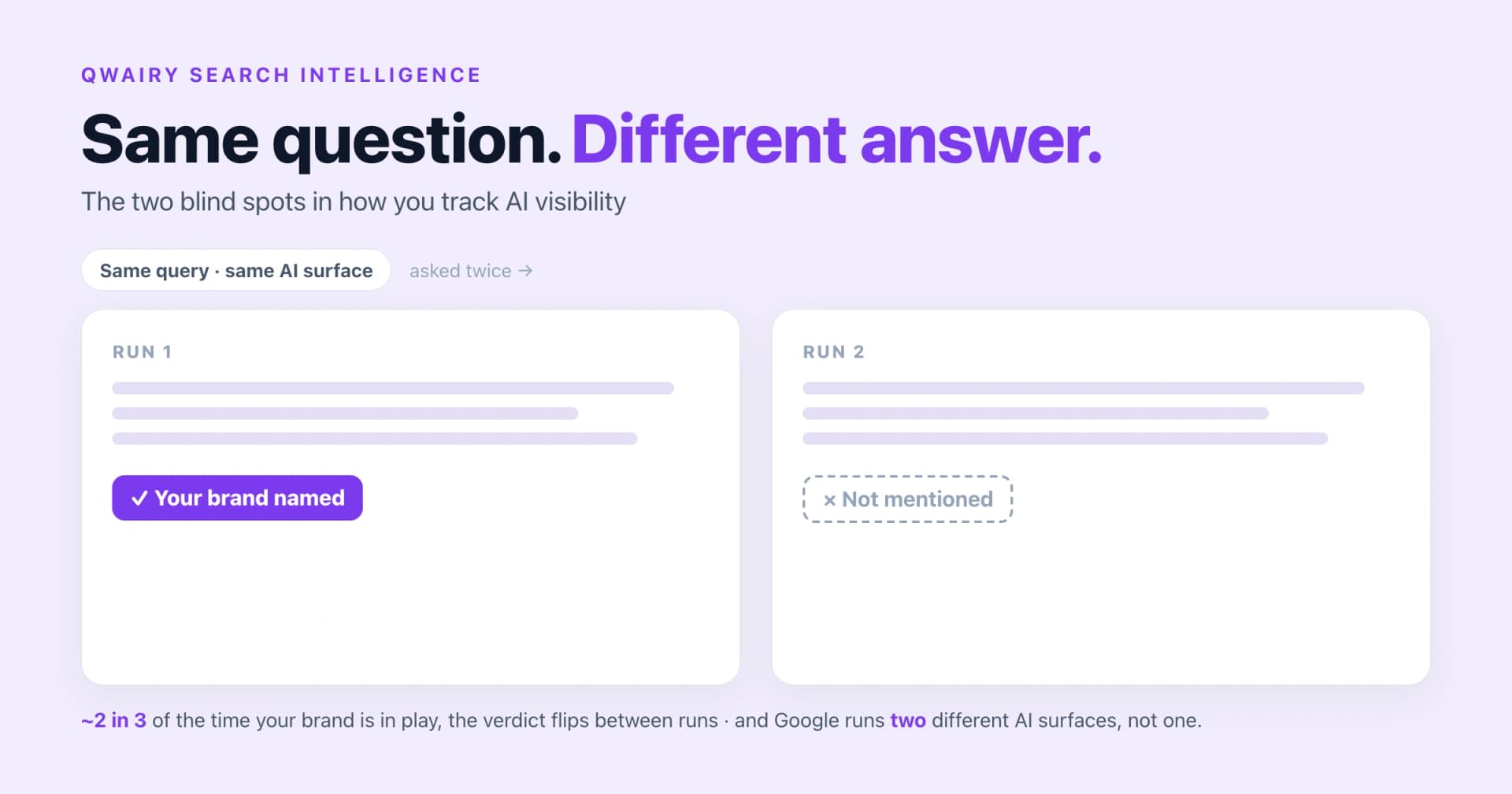
Two structural reasons a single AI visibility check misleads, both visible in Google's numbers. (1) Google is not one AI surface but two - AI Overview and AI Mode - which behave like opposites: AI Mode is ~4x longer, names 2x more competitors, cites 1.7x more sources. (2) Neither surface is deterministic: ask the same question again and the brand-mention verdict flips on ~1 in 4 questions, and ~2 in 3 of the questions where the brand appears at all. Same instability on ChatGPT and Perplexity.
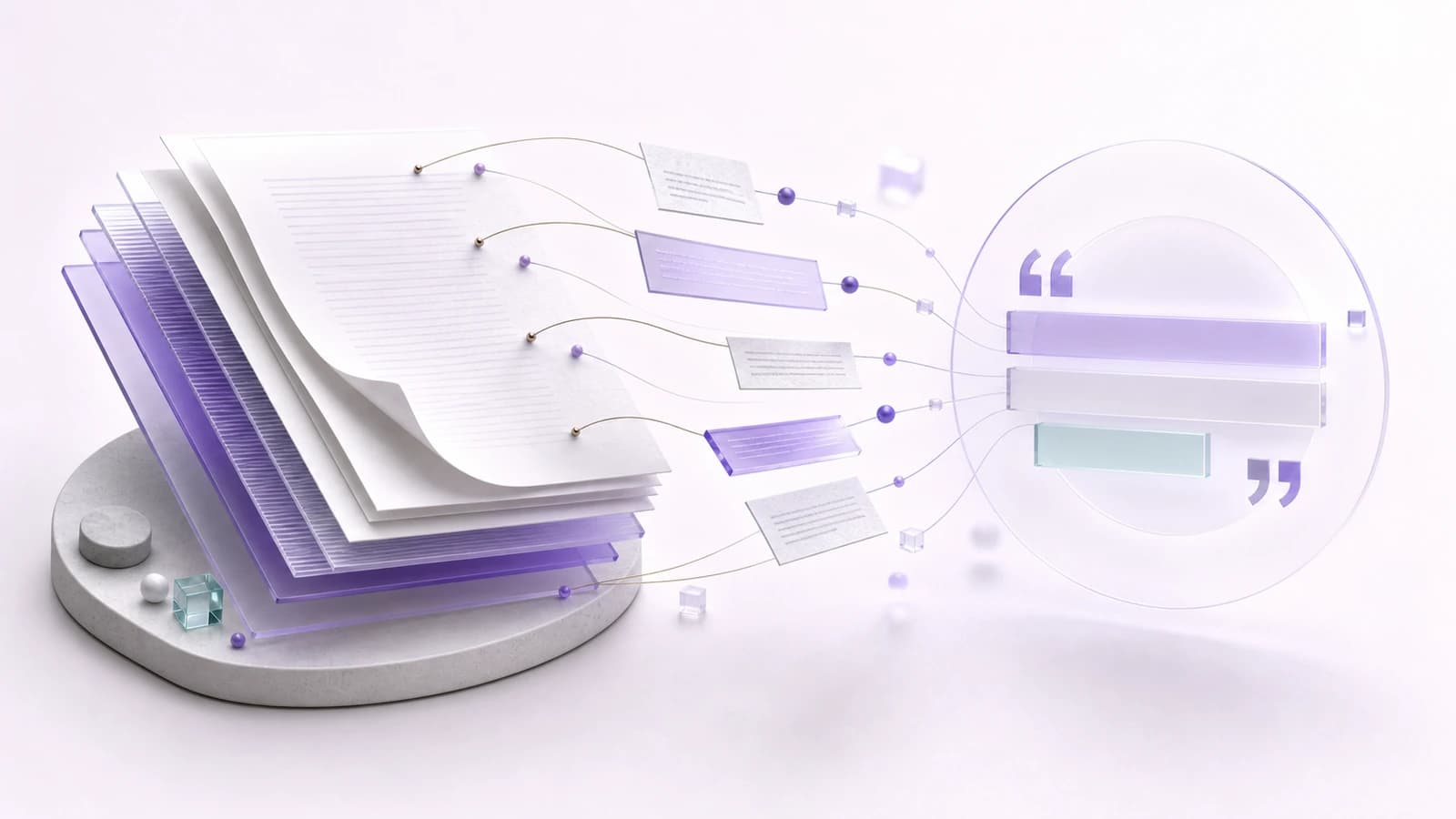
A practical, cross-engine playbook for earning citations from AI engines like ChatGPT, Perplexity, Gemini and Google AI Overviews. Learn how citations are chosen, the tactics that work across engines, and how to measure your citation share.
Comment Meilleurtaux, leader de la comparaison de crédits immobiliers en France, a utilisé Qwairy pour mesurer et améliorer sa visibilité dans les moteurs IA.